Showing posts with label 152 insights into my soul. Show all posts

Saturday, May 04, 2024

The pirate ride, aka still crazy after all these years

Well hello there. Still here, I see! I just popped in to assure you that I am alive.

I feel like this winter/spring has been a tiny bit of a rollercoaster. I am on day 19 of my cycle and that means I’ll feel overwhelmed for the next 10 days. I can’t be sure but I think the extremes of my rollercoaster have amped up in the last year or two. 
I’m told this could be the beginning of perimenopause. 
Frankly I was pretty sure I was starting perimenopause around age 35, yet every doctor told me no I was not. Well… I guess it doesn’t matter, except that if I meet 35-year-olds in the future who are like “am I crazy?” I’ll be like, well with this data set of two people, we can confirm that the midlife rollercoaster can start ramping up by mid-30s despite what the doctors say.

I remember having super broad mood swings as a teenager when I would feel so ecstatically happy after my period started, and so horrifically grumpy a few days after it was over. And then I had my encounter with birth control around age 21-22 that messed me all up, then I had all the babies and the postpartum hormones, and then I got diagnosed with PMDD, and now there’s this perimenopause thing. I have a sneaking suspicion that this is just my lot in life…

It’s the pirate ride.
Hashtag pirate ride life. 
That’s showbiz, baby!


Thursday, June 22, 2023

A warm hug


I had never heard of Mae Jemison until my kids’ school was being renamed a few years ago and she was one of the namesake suggestions. Now I feel like I see photos or quotes of hers all the time! Which makes me think, maybe I had heard of her sooner but just hadn’t noticed her…? Also… I wish she had been the namesake winner. Mae Jemison is a pretty rad school name.

I love what she says here about the earth and the sky, and letting gravity “give you a warm hug.” We live in a beautiful world 🌎 

Monday, February 20, 2023

Notes on faith


I was looking for something else in my Google drive and found these notes from an interview I did in 2019 for a podcast that used to publish regularly but stalled indefinitely with the pandemic. I enjoyed reading through my pre-Covid thoughts on faith. I pretty much still feel the same way about faith 4 years later. I can handily sum my faith up using the LDS Articles of Faith (https://www.churchofjesuschrist.org/comeuntochrist/article/articles-of-faith), although I also feel like it’s very useful for me as a believer, and for anyone who wants to understand me or my beliefs, to acknowledge the struggle and the wrestle of faith.

Something that 2023 Eliza would add to the issue of women and the church is the issue of LGBTQ marriage equality and the church. That’s something I’ve noticed and pondered for years, but didn’t think super hard on it until my late 30s. I personally hang on to the 9th article of faith on this topic (we believe that God will yet reveal many great and important things). At the same time, I don’t presume to speak for the church. So instead I hang on to the hope that I have for change. Hope, which as I’ve seen so eloquently described in an Ensign essay which I’ll find the link for later, is “expectation based on experience.”

Anyway, so that’s the State of the Faith for me. What do you think?


PURPOSE: The purpose of the Faith is Not Blind Podcast is to give listeners the opportunity to listen to narratives of people who have confronted some type of uncertainty in their lives, and yet have deliberately chosen to be actively faithful. Many of our listeners won’t have come from homes where they learned how to discuss spirituality and faith in a nuanced way, so these narratives will tutor and teach them how to have complex and constructive conversations about faith. 

THE NARRATIVES: These stories are case studies about people who not only see the gray area, but use their faith to help them navigate through it. These stories should be honest, yet hopeful. Please don’t feel like your story needs to be polished or didactic. Ideally the podcast will be conversational and casual, yet insightful. We’re not trying to give people answers as much as offer them ideas about how to grapple with questions in ways that encourage personal growth as well as a strengthened relationship with God and Jesus Christ. 

THE INTERVIEW: The interview will have a general framework, but the flow will be organic and spontaneous. Be prepared to give a brief biographical sketch of yourself in the beginning of the interview. Include details that will relate to your narrative. 

I grew up in California. Went to BYU, got married, finished school, grad school, moved to Northern Virginia with my husband and we’ve lived here for 13 years. We have four kids. Our oldest child is high-functioning austistic, which is what used to be called Asperger’s.

POSSIBLE QUESTIONS: You may be asked some of the following questions, but these are just general ideas to consider as you prepare for your interview. 

How would you describe your religious foundation? What was your home like growing up? How did your parents teach you to live your religion? 

Strong. We were always active at church. I’m the fourth of six kids and I grew up in a medium-sized town in Southern California, with a core group of kids my age who were also active at church. My family said family prayer every morning and night, had family home evening, we all went to seminary, my dad was the bishop. My parents are politically liberal but very religious. I didn’t actually know they were politically liberal, or that being so could be seen as an issue in the church community, until I was an older teenager.

How were you taught to gain a testimony? For you, what was your testimony based on?

My parents certainly led by example. I remember “catching” them praying quite a lot. My spiritual and religious habits came from them. They didn’t get super deep in terms of complexity and nuance. But they taught us straight from the scriptures and they took us to church every week. I think as a teenager, my testimony of the Book of Mormon and of Jesus Christ came through seminary, youth conference, and visits to EFY. I felt very keenly the need to repent of the mistakes I made and to try to be a better person. No one necessarily told me to, just the scriptures I memorized in seminary. I felt the Spirit the most through music and I still do.

What was one of your foundational spiritual experiences? What did this experience teach you that helped you deal with later questions? 

Receiving my patriarchal blessing when I was 15. I felt very “seen.” I felt for the first time that I had a job to do. I have read it a million times, in every stage of life and faith. Some of the religion classes I took at BYU were foundational for me too. Dr. Brown was my favorite religion professor, S. Kent Brown. I still remember him telling us to ask ourselves, “Can I stand the light? And can I stand the darkness that comes afterwards or before?”

As a child or teenager, how did you view God? How was this view of God influenced by your parents? How did your relationship with your parents and the way they parented you shape your view of both God and religion? 

    I was pretty matter-of-fact about it. This was THE true church, and wasn’t I lucky to be born into it? My parents are orthodox Latter-day Saints, and they believed in accepting all the callings and going to all the meetings and supporting all the activities. It was definitely a sense of duty. I felt that God was kind and forgiving. I felt that he was happy with the way I was living my life, and that approval meant a lot to me. I suppose I have always wanted approval from my parents too, and so there may be something deeper there. As I got older I learned that they were a little more unorthodox in some ways than I had thought. My mom is a feminist, like me. I feel like I can talk to her about anything related to women and the church and she understands. My dad is incredibly generous with his attention toward whomever is talking with him at the moment. People flock to him with their problems. He and my mom both care very much about “the one” sheep and I would say that is a framework I want my life to fit into as well.

Describe a moment in your life when your religious paradigm shifted. Please be prepared to tell this story with both detail and honesty. What caused the shift? How did this shift change the way you viewed God or religion? 

Right around the time I turned thirty, for the year or so before and after, I felt completely lost, a little bit like I was drowning almost. I found out later, after going to therapy, that I had anxiety and some obsessiveness happening, which was sort of a lingering postpartum issue that I had tried to bury. I woke up in the middle of the night one night, literally sat up with the urgent thought out of nowhere, “What if Jesus isn’t real?” I had never considered the possibility before, at least not seriously. And I wasn’t even really thinking about my faith in those years, I was just living my life, active in church, raising my kids. There was some tumult locally at that time with Ordain Women, but I didn’t feel like that was affecting me that much, although maybe it was and I just didn’t recognize it. 

I felt like everything as I understood it just sort of vaporized in that specific moment in the middle of the night. After that I just sort of walked around with my eyes darting back and forth (not literally, but that’s what it felt like), feeling like everyone could tell that I was different. But this epiphany sort of got lost in the shuffle of my own mental illness for about the next two years. I went to therapy and figured out some of what was going on with me. I pushed the Jesus question aside until later.

How did you deal with your questions? What resources did you use? How did the way you saw religion help or hurt your process?

So I think I have had two different issues, the major one being wondering if I believed in God at all, and a more minor one being confused and at times angry about my role in the church as a woman. 

For the first one, figuring out my faith, once I felt like my mental health was in manageable bounds, I turned to the Book of Mormon because I felt like praying wasn’t working, and I made a goal to finish the Book of Mormon in two weeks. It took me three weeks, but I was completely immersed in it. I had the audio playing on double-speed all day. Seeing the arc of this ancient civilization and the cycles that the people went through of prospering and then becoming humbled, seeing myself so completely in that metaphor, opened my heart in a new way. Moroni said you receive no witness until after the trial of your faith and I’ve read that a million times but it finally was concrete to me. I love the symbol of the heart that you see throughout the scriptures, that people’s hearts are softened or that they have a new heart. I felt that I got a new heart through this process. I can’t go back to how I felt before, the knowledge that I thought I had, but I don’t want to.

I have done the B of M “speed read” a few times since then and I kind of compare it to a Whole 30, which is a crash diet that cuts out sugar and processed foods and is meant to reset your cravings.

I can’t really pin down a process or resources in terms of the day to day maintenance. Very close friends of mine have stopped believing over the years, and family members, and every time we got another announcement from someone we loved who was leaving the church, my husband and I just decided yet again, we are committed, we are not going to go down that road. It has been hard for me, especially my first few close friends who left. It has gotten a little easier as I’ve clarified my own views and thrown myself into teaching my kids what I believe.

As far as women and the church, well, that’s still my cross to bear.

How does defining a testimony as a linear or static concept damage faith? How do you feel that a testimony should change or develop over time? Is it worth the risk?

I guess the concept of a linear or static testimony damages faith when we get older and start getting more and more information, and our life becomes full with other things, and we change. We go through developmental stages even as adults. This relates to autism actually; so, the autism diagnosis is a “spectrum,” which I think most people think of as linear (low-functioning vs. high-functioning) but it’s actually more helpful and more accurate to think of it like a true full-color spectrum, like a big circle full of all shades of every color, because people with autism (like people without autism) are SO unique. I also think about the image of the winding staircase, where you continue to cover a lot of the same ground but higher up. I think the circle is just a better shape to describe life than a line.

How do we get away from binary thinking (true/false binary) while still experiencing at least some degree of belief?

I guess my answer veers into agnosticism, but the fact is that we can’t know everything. We don’t know what will happen next, we don’t know all the details behind whatever transaction is happening in front of us, life on earth is complicated, so why wouldn’t faith be too? I really like the visual of the fetus in the womb who can hear noises, can see light, but has no idea what awaits her on the other side. I feel that way about eternity and heaven. I get these sort of glimpses or flashes. But I really don’t know. Eye hath not seen, nor ear heard.

What roles does cognitive dissonance play in your life? How can cognitive and spiritual tension be constructive? How does spiritual tension operate in your life? 

    I suppose thinking and seeking can be an exercise like any form of exercise. You need resistance and tension in order to grow. That growth never feels good in the moment, though.

When faced with the choice to leave the church or to stay, what made you stay? 

    It’s part of my heritage and the way I want to live my life. It’s how I want to raise my kids. My family and I have a lot to contribute. I want to be that reassuring voice to people who are struggling, that it’s not black and white and that it’s a journey. I haven’t ever considered leaving.

What helps you stay in the Church now? Is it that you don’t see reasons to leave or do the reasons to stay outweigh those reasons? How do you see it? 

    I have lots of reasons to stay. The scriptures speak to me. I like the structure that the church offers to study and understand the scriptures. I love the songs. I love Primary for my kids (and for me). I love the community. I love the rituals of the sacrament and the temple. 

I don’t particularly have reasons to leave. I see things I don’t like, things I disagree with. Some of the things that bother me the most, I believe will change eventually. Others maybe not. There are lots of reasons that people leave. I’ve never been able to convince anyone that their reason for leaving isn’t enough. Because it is enough--for them. Even if I wish it weren’t.

What have been some of the most helpful resources for you as your faith has developed? 

    The Book of Mormon. Talking with lots of people, particularly my husband and my sisters. I love the book Women at Church by Neylan McBaine. And the book Letters to a Young Mormon by Adam S. Miller. Everything by Clayton Christensen. And Bruce and Marie Hafen. ;) There’s a Facebook group called Q.Noor Sisterhood that I really like too. I loved Searching for Sunday by Rachel Held Evans. I loved an article I read in the Ensign once that referred to what people commonly call a “shelf” (as a place to put troublesome doctrine) but the author thought of this instead as a puzzle. When you’re putting together a 1,000-piece puzzle you are constantly trying to make pieces fit and then setting them aside to try again later. It might take forever and you might need a lot of help, but eventually you’ll find a place for the 1,000th piece.

How do you try and avoid seeing in binaries? Do you have a specific experience which helped you to stop seeing in binaries?

 I think just raising my kids, in particular my one child and realizing that there’s so much I don’t know about any given situation. I have been in SO many situations that I never ever thought I would be in. Usually in public, when my child is doing something that I think reflects badly on me (and on him). But I just have to push through, and I know I’m a good mom and he’s a good kid, even if it doesn’t look like it to strangers in the moment who don’t know our life. So, I just assume when I witness similar events in public that the mom I don’t know whose child is going off the rails, is also trying her best.

In your opinion, why are binaries dangerous? How do you try and teach your children to avoid black and white thinking? What risks do you see in this type of approach? How do you navigate those risks? How do you help your children navigate those risks? 

    I am still trying to figure out how to teach my children to avoid black and white thinking. With autism, a lot of things are black and white. That’s the only way the world makes sense when you’re getting so much input and it doesn’t all line up and settle in the way it does for a neurotypical person. We’ve run into this so many times when trying to explain and discuss complicated things. From the beginning we’ve always been pretty open with our kids about everything. Sex, racism, history, politics, church, faith. But then I sometimes hear my words twisted because my son takes them to be literal. So I have to be really, really careful about that.

How do you avoid judging others who may think in binaries? How do you avoid judging others who may choose to leave the church? 

    That, I think, just takes time and experience, and you also have to be willing to apologize if you get into it with someone. Of course I pass judgment on anyone who doesn’t agree with me (since obviously, being myself, I know soooo much ;), but I know that people pass judgment on me too and I think we just have to accept that and try to show love by discussing our differences (or not discussing them, if that’s better for the relationship at that time) and just be committed to embracing the diversity that comes from living in the world. 

One thing that has helped me immensely, which may sound like burying my head in the sand, was to unfollow everyone I know on Facebook. I only follow family, and some discussion groups that have to do with my personal interests but are mostly strangers. It was just too easy to pass judgment on people in my life based on these little sentences they wrote or articles they shared.

In Faith is Not Blind, GK Chesterton’s three levels are mentioned (optimists, pessimists, and improvers). What do you do to be an “improver” in your own life? 

    As far as church goes, I try to be pretty open and curious in church meetings. Particularly in ward council. I’ve stuck my foot in my mouth so many times, but I feel like a faithful feminist voice is needed in those meetings. There’s this sort of trendy yet classic idea that’s been circulating the last few years of being vulnerable. Brene Brown. I’ve gone with that in all my conversations at church. I’m pretty open. And I am curious about what people think or believe and why. Sometimes it backfires (and sometimes I go into an anxiety spiral afterwards) but I think most of the time it’s positive.

Who are some specific people in your life who have modeled how to be an “improver?” What have you learned from them? 

    Hmm. I think people who run for local politics (school boards, city councils, etc.) are sort of a classic example of this. It seems that the higher up you get in politics, the more likely you are to have to bend your ideals or maybe even get into corruption. But that beginning local level, fresh new candidates, I really think that people are dedicated to improving, not looking through rose-colored glasses and not throwing up their hands, but really taking the information and trying to solve problems.

How does your specific area of expertise help you to deal with your religious questions? How does it complicate your faith? 

    I’m a librarian at a community college, so in a lot of my teaching and working with students I emphasize looking hard at the source of information: evaluating it for currency, relevance, authority, accuracy, purpose (CRAAP). I also emphasize looking at every side of an argument. So I guess my experience with teaching kids how to research helps me not be so absolute in what I believe, but also maybe I overthink things sometimes.

How has your education added nuance to your understanding of God and religion? How do you think education and critical thinking can help deepen faith? 

    I have always thought the main thing that helped me have such a good experience going to the temple for the first time, was my English degree. It’s all about symbolism and patterns. As I have gotten older I have seen that more in the scriptures as well.

How would you encourage others to approach difficult theological or spiritual issues? What has worked for you? What hasn’t worked for you? 

    I think it’s really important to talk to people who have wrestled with faith and have not become bitter. Also, I think we’re just used to getting things quickly and that’s now always how faith works. For me, I get these glimpses, or memories, or I have this experience where something just breaks inside. It’s a lifelong process. I’m sure I don’t have this all figured out.

How would you describe your relationship with God now? What experiences have helped to create this relationship? 

    I would say it’s about gratitude more than anything. In times when I felt like I wasn’t even able to pray, I could always say a prayer of thanks. “Thank you for (X).” It’s an evolving relationship. Much like any relationship. A healthy relationship isn’t one-sided, though. After my relationship with God is one-sided for awhile, then I always come back and apologize. The more I am able to pray and stay connected, the more I get those glimpses and flashes of something bigger out there that I can’t quite explain. It might be a long time--a really long time--between glimpses. But they carry me through.


Thursday, November 24, 2022

Thanks for my parents


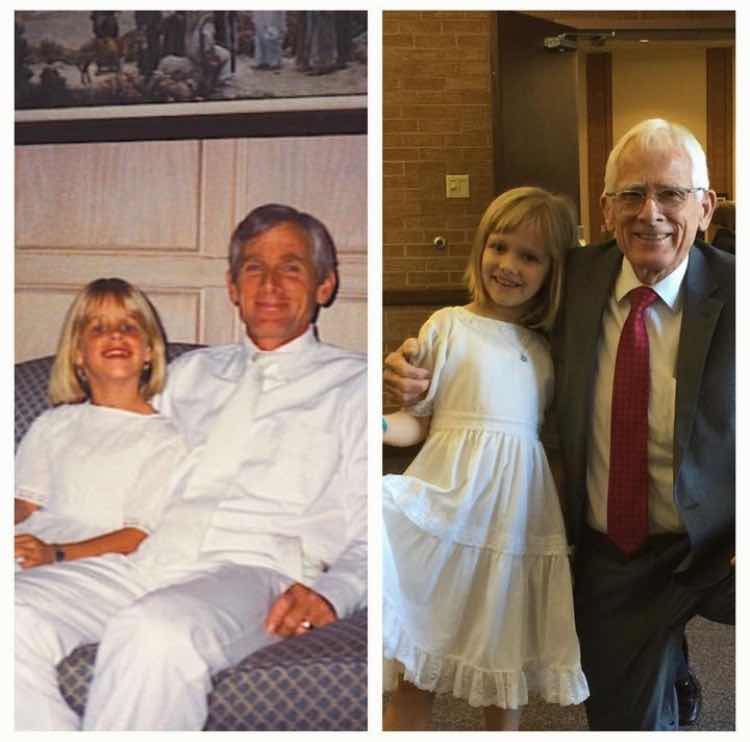
I’m incredibly grateful for my parents.

A random yet fairly deep thought hit me suddenly yesterday, seemingly out of nowhere, as I was driving to the grocery store and my kids bickered in the backseat. The most random and deepest thoughts seem to hit like that when I’m locked into a mundane task.

I spent the most important years of my life (in terms of shaping my brain, shaping who I would be as a person) thoroughly steeped in love. Drenched in it. My parents were not perfect, but they loved me, and I always felt it, I always knew it, from the time I was very small, despite any (perfectly normal) mistakes they may have made, despite any outside forces that may have tried to sneak in, the home I grew up in was fiercely protected by their love and their desire to do what was best for their six kids with our varying needs, and I can’t imagine a more precious gift.

They showed me by example what to do for a child. Imagine a movie montage—no music though, that’s just cheesy 😉

I can picture sitting in the living room as a preschooler, brushing my mother’s hair in the dim light while she sat on the floor and dozed. 

I picture being in the Santa Anita Mall parking lot at 6 am on a Saturday with my dad, learning to drive his truck (years before I was legally old enough to drive, mind you). 

I see my mom walking into my bedroom where my friends and I were hanging out, picking up an empty laundry basket, putting it upside down over her head with a big smile and prancing out triumphantly as we laughed. 

I see my dad standing in front of us kids on a Monday night, with a white board behind him on an easel, reading a verse of scripture to us that had touched his heart.

I remember feeding ducks at the arboretum in the shade with my mother and assorted little friends. So many times. Preschool; Girl Scouts. All roads lead to the arboretum.

I remember sitting on the kitchen table around age 11, around 9 pm, Hannah and Noah in bed already,  everyone else out for the night, picking up the receiver from the (corded) wall phone to call the pay phone number at the stake center where my dad was playing basketball, asking whomever picked up to find Harry T, so that he could assure me that I was safe and that he would be home soon.

I see my mom puttering around the house late at night in the summer, whole-house fan blaring, waiting for us to go to bed so that she could shut off the house fan and go to bed herself.

I see my dad wrapped in an afghan, dozing on the floor outside the bathroom as he waited for me to finish up (because why wouldn’t a preschooler wake up her father to accompany her to the bathroom in the middle of the night?)(he was also the go-to whenever the pukes hit me)

I feel my mom hugging me when I broke down crying after I got back from girls camp and realized she had removed everything from the bookshelf from my room and put the bookshelf in the kitchen to hold pots and pans. 😂 (I was leaving for college the next day; she was just being efficient. 😂)

I feel my dad’s large hands on top of my head as he said blessings of healing over me dozens of times throughout my childhood, whenever I felt sick or afraid.

I can hear my mom’s voice cracking with emotion as she said a family prayer with us on the morning of my wedding.

I can hear my dad telling me the stories of his father that I hold close in my heart, stories of a man who changed so completely and left behind a life of anger to become a man of peace, then suffering however briefly from Parkinson’s and Alzheimer’s before he died.

I can picture driving my mom (in her 15-passenger van) to her evening classes at a local university when she went back to school to get her teaching credential.

I can picture my dad popping up out of the ocean as a big wave came at sunset, pointing to the wave and yelling “This one’s mine! H.T.!” and then riding the wave in to the sand. 

Maybe I’d better write these all down into a book, since it’s already too long for a blog post and that’s only the tip of the iceberg! I’m endlessly grateful for these two strong and brave and goofy and faithful and life-loving humans who raised me to become—I think, I hope—the same kind of human, offering the same gifts to my own children.

Wednesday, November 16, 2022

Thanks for the growing

I just realized that I forgot to post two days in a row. 😂 Whoops!


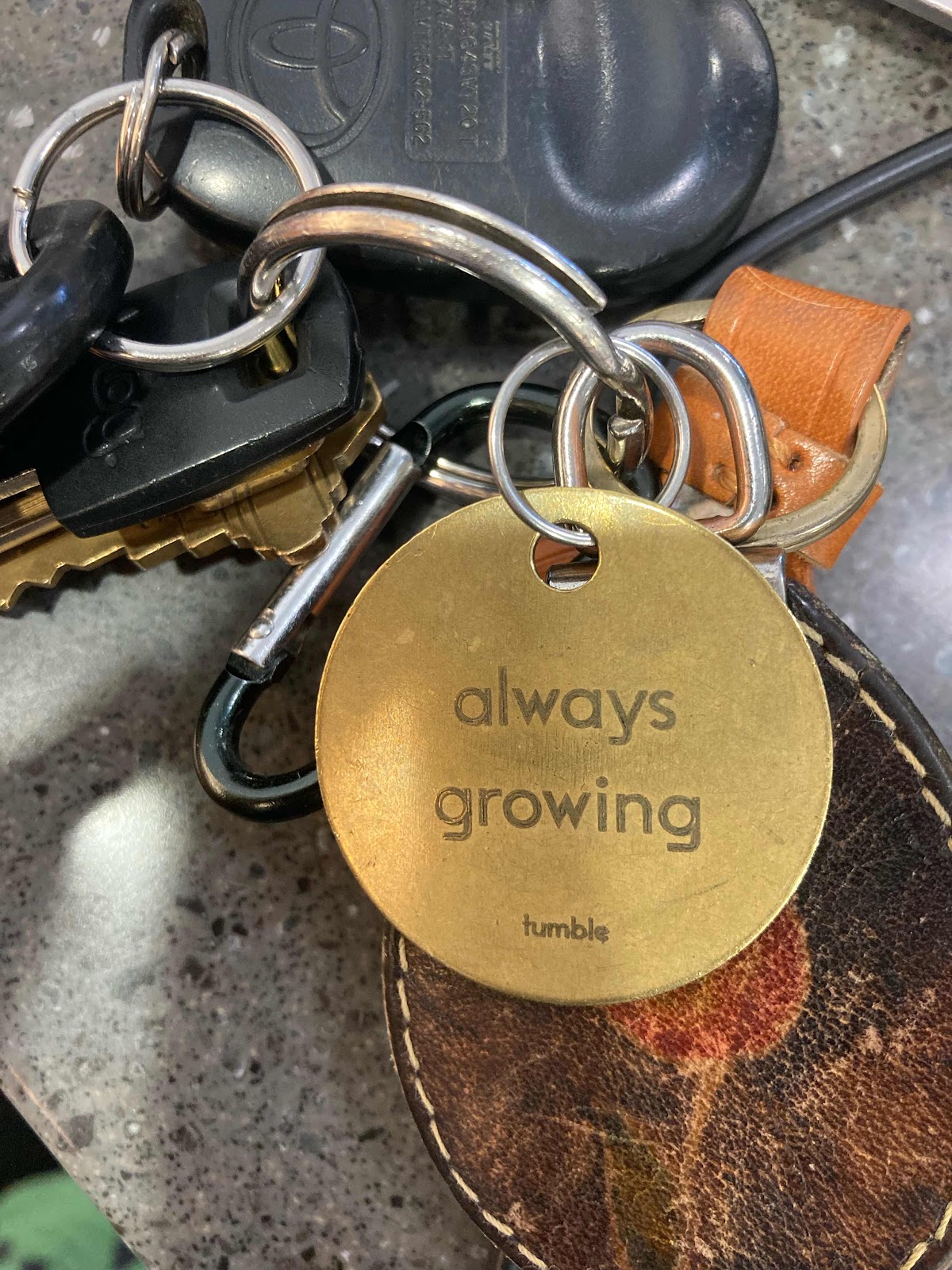
I’m thankful for opportunities to grow every day, all the time. I got this little keychain a year or two ago, and it reminds me every time I look at it that I am in fact growing. (Cue the classic Raffi ditty “I Wonder if I’m Growing” 🥺)

True growth / progress is hard and it hurts and it is also rewarding. I feel those growing pains a lot, even in my middle age. 👵🏼 I’m thankful that I never feel stagnant in my life and that I’m always learning and always growing.

Sunday, January 31, 2021

A simple seed (an old favorite)

I’ve been thinking about a passage from the beautiful, intense magical realism of Like Water for Chocolate. It first struck me as a college student who felt the pain of becoming an adult. Years down the road it struck me when I became pregnant for the first time and noticed how quickly (and sometimes painfully) my body was changing all on its own. 

Lately it has been striking me as I have waded further into the world of antiracism. Which by the way is not a straightforward world at all, despite my (or anyone’s) desire to make it so. I have found myself over and over in awkward situations in this world, sometimes of my own making, and I just plunge forward anyway, because you don’t know what you don’t know. And I don’t want to be ignorant. Not now and not ever. So... ouch. I think I might be growing.

"Tita thought of the many times she had germinated kernels or seeds of rice, beans, or alfalfa, without giving any thought to how it felt for them to grow and change form so radically.

"Now she admired the way they opened their skin and allowed the water to penetrate them fully, until they were split asunder to make way for new life.

"She imagined the pride they felt as the tip of the first root emerged from inside of them, the humility with which they accepted the loss of their previous form, the bravery with which they showed the world their new leaves.

"Tita would love to be a simple seed."

-Laura Esquivel, Like Water for Chocolate

Sunday, December 27, 2020

Winter walk


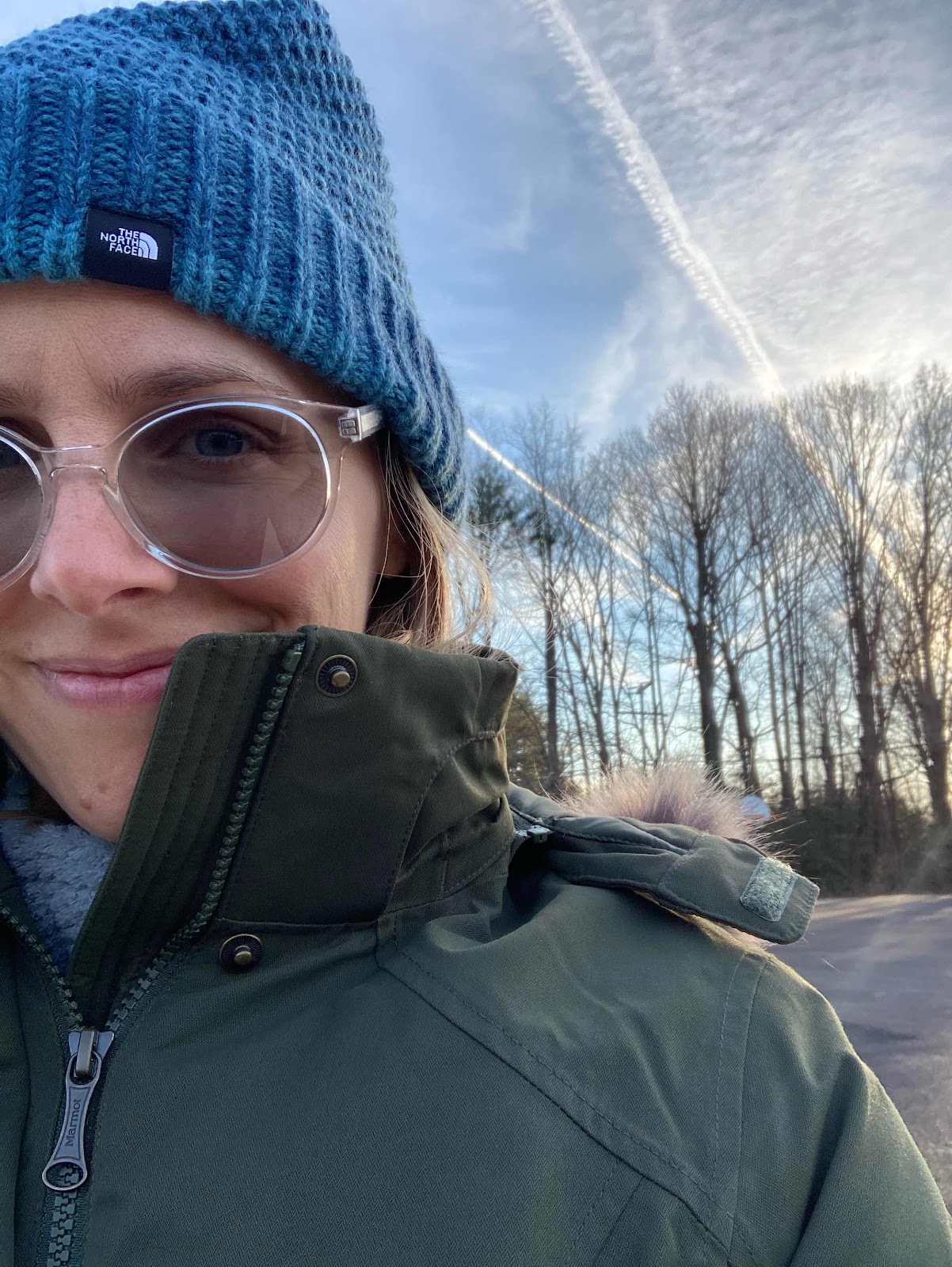
Just a girl in her Transitions lenses on a winter walk.

My therapist recently announced to me, after asking me a list of questions, that I have “a mild depression.” Not exactly shocking news. It’s been pretty hard for me to get out of bed lately. It’s been a struggle actually off and on for the last couple of years. It’s weird. It’s how I felt when Lars was a newborn and I didn’t quite know what was wrong with me. Now I do know, and I suppose that’s helpful! It’s also helpful that I don’t have an infant or a two-year-old.

Anyway, I don’t know if it’s seasonal or pandemic-induced or what, but gosh darn if I don’t have the hardest stinkin’ time getting out of bed in the morning. It’s extra strange because I truly do not feel sad or despondent or any other feelings you associate with depression. I just... don’t want to get up. And since my kids are fairly independent, I don’t really have to. But leaving them to their own devices in the morning has effects that show up later, with kids acting out, or eating candy for breakfast, or skipping class... so the practice of staying in bed all morning is really not sustainable for a mom of any age kids. 

But I am working on ways to manage it. Going to ponder whether I can weave it in to some sort of New Years resolution, which I frankly really enjoy and always enjoy each year. I like putting away the Christmas decorations, feeling like my house somehow just got bigger with all the sentimental holiday knick-knacks put away, layering on the winter clothes and facing the longest and coldest month of the year head-on. 

Granted, I usually do this after a two- to four-week break from real life which has been spent in mountains and/or sunshine with people I adore.

But I’m a grown-up girl (as Neil Diamond would say)(“look at what you’ve done... why, you’ve become a grown-up girl”) and I can handle it. Bring it on, January! And February! And March...

Friday, December 04, 2020

Thanks for this time


This Christmas 🎶 will be 🎶 a very special Christmas 🎶 for me...

I hope and believe that despite the persistent grief I am feeling (Christmastime is always a rollercoaster for me, I can feel 5 or 6 different emotions at any one time even in a non-pandemic year) I will look back on this Christmas as a very special and cozy one. The Christmas that happened in a year when the six of us hunkered down and tried our hardest to sift through our priorities so that we could be grateful that despite all we feel we have lost—most poignantly, time with extended family—we have ultimately what we cherish most, which is each other. We have not lost each other. AND even though we aren’t in the physical presence of extended family, since the pandemic began we talk and text with them literally all the time. I hate to think about the hundreds of thousands, maybe millions, of people who have truly lost family and friends this year—to covid, to mental illness and suicide, to stress-induced rifts in communication, to that sad phenomenon of “covid divorces.”

It’s wild really. We are so insulated. We usually put almost all of our holiday energy into traveling, and since that’s not happening I hope we can put it into our little family, our faith, our dreams for the future, and—never to be forgotten since it’s the second great commandment—our community and our “neighbor,” whomever that might be. I loved the line from Mr. Rogers that I quoted on an earlier post that is on a loop in my brain

Love isn't a state of perfect caring. It is an active noun like struggle. To love someone is to strive to accept that person exactly the way he or she is, right here and now.

That’s how I feel about my family and my “neighbor.” That’s how I feel about this year too. It is what it is and I am striving to accept it. I guess I’m just putting these thoughts out into the void to help me make sense of them. So... “goodnight dear void” (gold star if you get the reference) and thank you for being you!

Sunday, September 06, 2020

Here I am


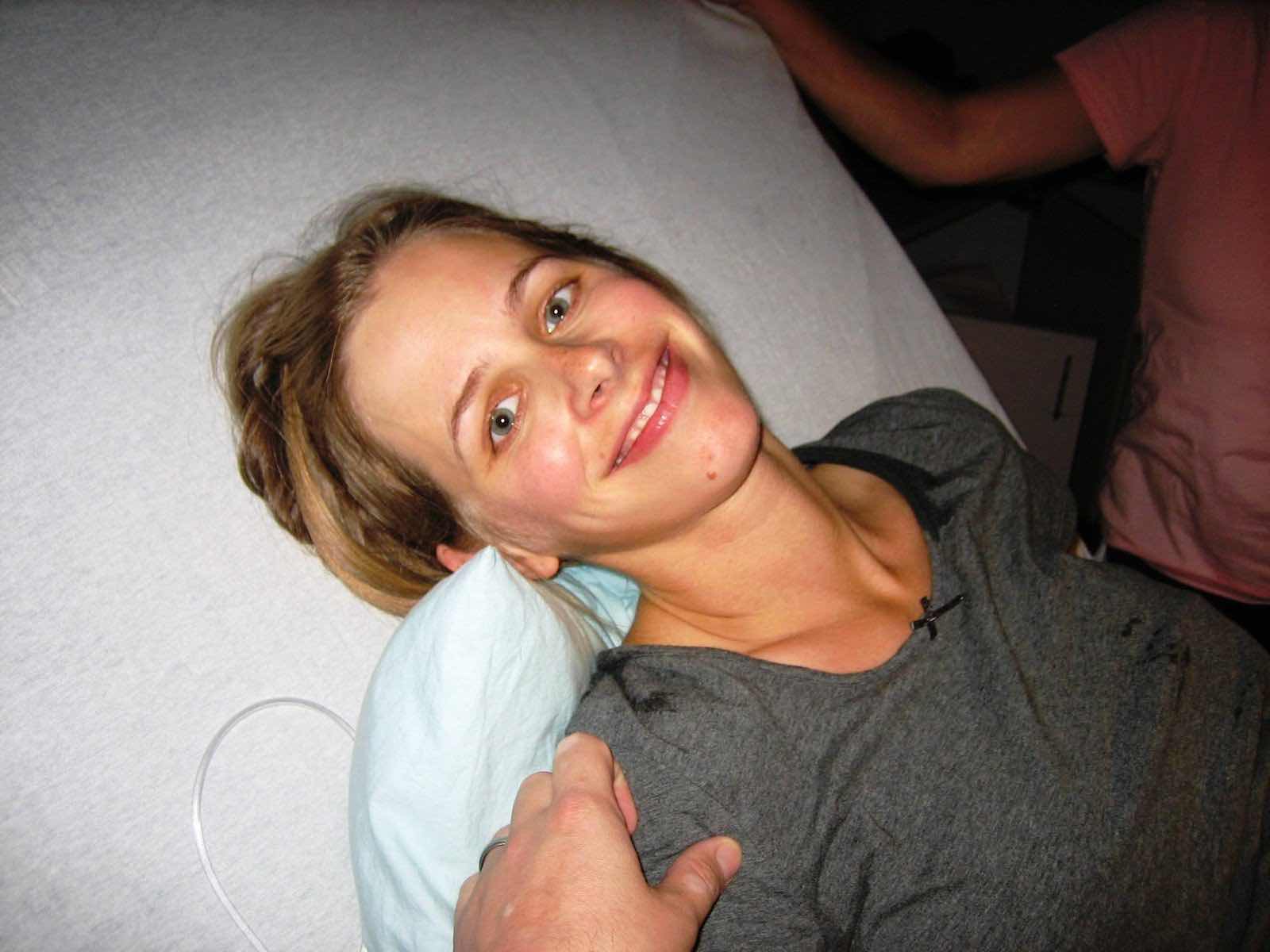
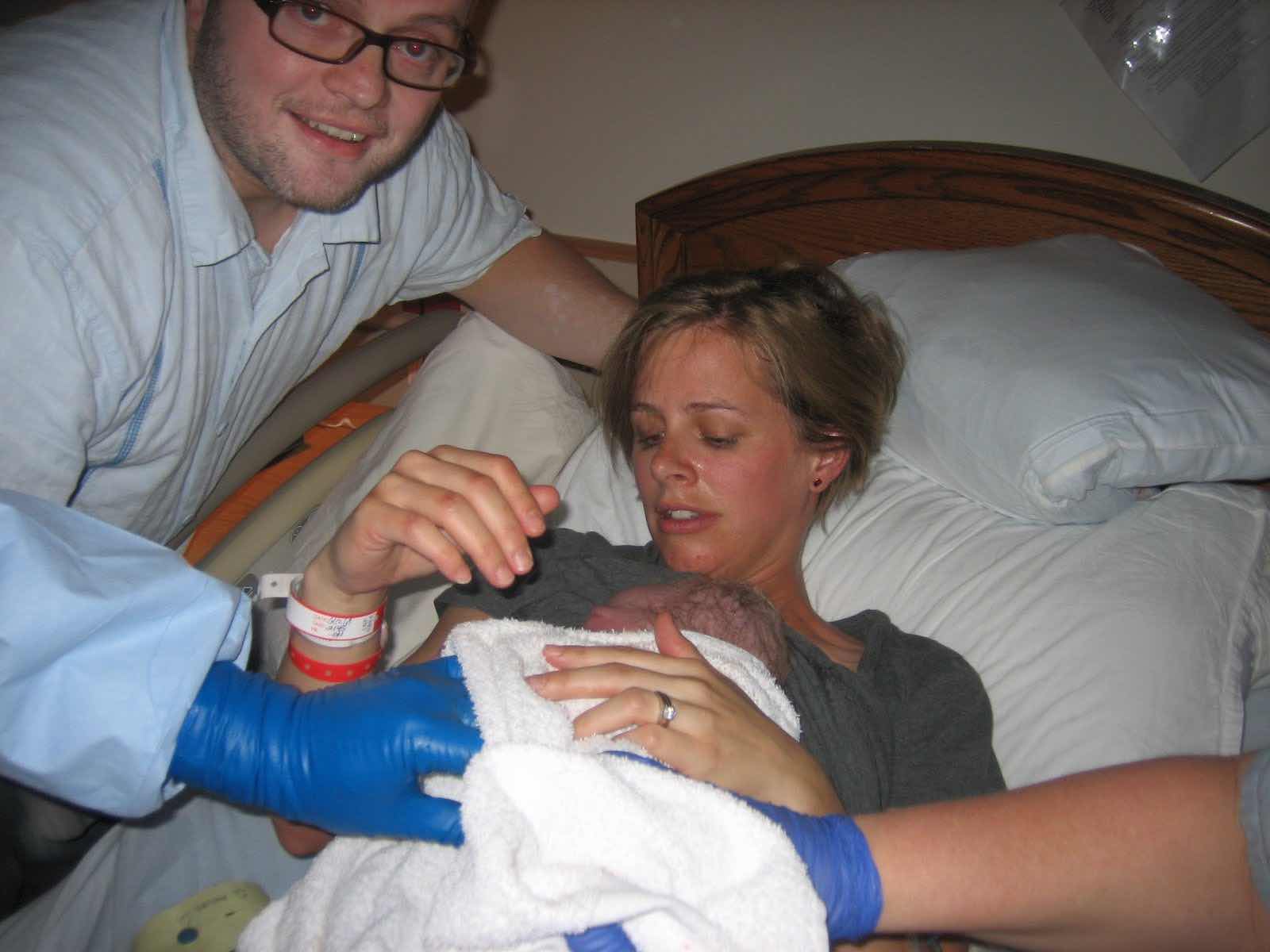
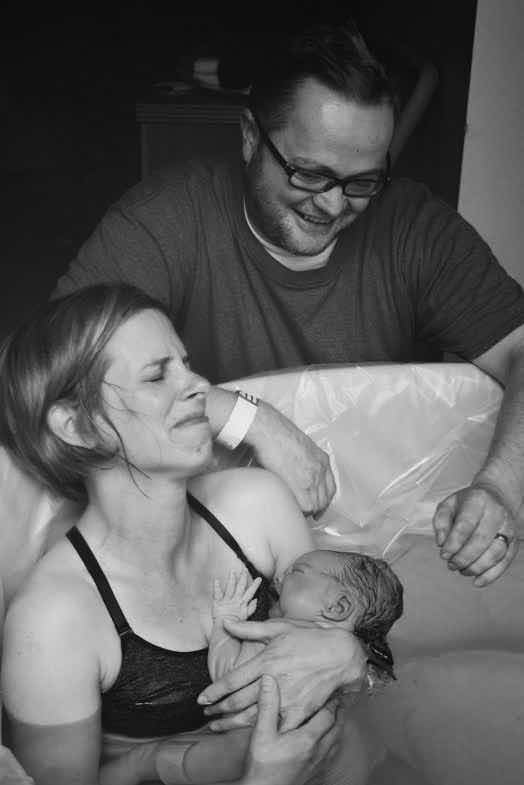
**Note for the Anxious: this photo is 13 years old; I’m not in the hospital.** Apropos of nothing (other than the coincidence/pun situation of it being Labor Day) I was looking at these snapshots taken at some of my most vulnerable times (2007, 2008, 2011, 2015). 


All of my kids’ births were so different, but they were progressively better experiences. I knew more each time, and I think most of all I was more willing to be vulnerable each time and truly let go of how I thought I was “supposed” to act. With Theo I was hyper-aware and rigid. With Ida I let go a little more. With Lars I blocked out everything and everyone around me. By the time I had Polly, I was like “whewwww here I am world!!! Like it or not!!!”
🎢🎪🎡 


Anyway I have been thinking about the confidence that’s required to be truly vulnerable, and how that’s sort of ironic. Also how anxiety interferes with the flow (in my case, I am confident ➡️ and then I am vulnerable ➡️ and THEN I get anxious afterward 🔁 when it’s too late to stay in my shell and hide my true feelings. I feel that a time machine would be so useful for the socially anxious). Does this even make any sense? 🤔 Whewwww here I am world! 


(And then she turned motivational) It’s a new school year. Be you. Be the gift to the world that is the true and unapologetic YOU. Here we go! 🎢

Sunday, August 02, 2020

Notes from the field


I was looking through notes on my phone and found this, from therapy a few months ago. Thought I’d blog it, because, why not?

What are my best coping mechanisms?
-Quiet time every day
-Routine for everyone
-Go running
-Clean the house/have a clean house
-Take a bath
-Announce/explain how I am feeling (usually to kids)(e.g., grumpy, sad)

What is my plan for future difficult conversations?
-Modify my intensity
-Prepare specific points I want to make and also consider what I might be willing to concede
-Be ready to say “I do want to talk about this with you but I need a few [minutes/days/weeks] to ponder it first”

What are my strengths? I am
-Honest
-Candid
-Thoughtful
-Open-minded
-Generous
-Self-aware
-A good listener
-An advocate
-Willing to be vulnerable for the sake of shared experience
-Willing to set boundaries

Just your free therapy minute for the day. Feel free to go through the same exercises if you’d like to!

Tuesday, July 21, 2020

Accidental remodeling

Well, it's been a circus here what with the accidental basement remodel. I have no complaints at all. I am very glad that this is happening, and I am very grateful that we are in a phase of our life where we can spare the time and the money, and it is worth the time and the money to make the space work better for us since we're at home all the time, and someday, we will really enjoy it! Currently the plans are:

-wait for remediation and re-inspection (if you follow me on IG or talk to me on the phone, you know that the new egress window failed the county inspection, TO NO ONE'S SURPRISE, AHEM)
-wait for 3 other replacement windows (met the new window guy today, he seems good???? I hope????)
-wait for drywall/carpenter to come and do... drywall and carpentry (he has already done some work for us and I was very pleased! yay)
-wait for carpet guy to come put in the carpet. That's the final step and the only step that is covered by our house insurance.

*technically there is one more step, which is enlist a plumber to replace our laundry pump and sink which are ancient and due to die any day. That is almost an afterthought here, but is actually a project I was planning to do right before the pandemic hit, and then canceled because I didn't want people working in my house. Now... people are working in my house anyway. But I stay on a completely separate floor from them while they work... and we couldn't exactly let water keep seeping into our basement... so I feel OK about it.

In between all the waiting, there is a LOT of other stuff that I need to do to prep for each phase of the project. The biggest task will be to handle the storage room, which currently looks like a storage room exploded in it. Because we are (probably) going to be moving a door from one wall to an opposite wall, we are going to have to reconfigure most of the shelving that is already in there. I think in the end it will be better all around. It's just going to take a lot of work. And I think I also need to get rid of a lot of stuff. And the funny part about that is that I REALLY DON'T HAVE THAT MUCH STUFF. I just have a lot of kids, and they outgrow stuff and they also eat stuff. I feel like those two facts about my kids are what keep my storage room humming (and exploding)(not literally either of those things, just metaphorically. If you were worried).

The second biggest task will be to move everything out of the very large bookcases in the office and the family room, so that we can move the very large bookcases, so that drywall can happen in those rooms. This is a very very close second.

The third biggest task will be to move all the furniture out of the family room and office so that carpet can happen in those rooms. This is a very very close third.

Listen, I know these tasks seem silly compared to the whirlwind that is going on in the streets and the courtrooms and the legislative halls and the hospitals and the Zoom rooms of every country in the world. I know there are real problems out there and I am trying in my own various ways to contribute to the solutions. But it also gives me confidence and satisfaction to conquer this little corner. I remember my Hindu friend who showed me her prayer room and explained her rituals of working on specific manual tasks while meditating (sounds counter-intuitive at first but it grows on you!). Sometimes I find myself in an almost meditative state while working on novel manual tasks--although the everyday stuff, I don't get quite as lost in. How else do you explain how sparkling clean my above-ground pool is--vacuuming that thing puts me in The Zone, I think I've mentioned that we call it my fifth child--while my kitchen floor is constantly sticky with who knows what?

So again: I'm NOT complaining (except about the terrible egress window contractor. I will complain about him until I'm dead). Just laying it out for the record and for my own organizational purposes. These are going to be my "weekly pandemic goals" for the rest of the summer, probably. I guess my kids are old enough now to be enlisted into these tasks too. Whew, this is going to be fun! Project Accidental Basement Remodel, we're not giving up on you!

Sunday, July 05, 2020

What did I miss?

"What did I miss? Virginia my home sweet home I wanna give you a kiss... mwah"

I'm having writer's block! Whyyyyy!

Maybe because my Instagram has become more bloggy as of late. I'm getting the energy out that way. I prefer to be more myself on the blog, though. So I may pull back on the 'gramming. And round and round we go.

A few people have asked me some form of the question, "What did the pandemic help you discover that you could live without?" At first I couldn't answer it. All I could answer was: "What do you miss the most about pre-pandemic life?" And these are my answers to that one:

I miss:

-TRAVELING (particularly to see family... it's been 6 months since we saw any family, and that is a long time for us!) I do not miss airplanes; if I never got an airplane again for the rest of my life I'd really be fine with that... OK, I do want to visit other countries again in my life, and I plan to, but I would be fine with never getting on an airplane again to travel domestically.

-The pool and swim team (now that it's summer)(in the spring I missed my kids' school)

-Museums

-Close contact with people I love. Hugs, etc. This one took me a while to realize because Polly is all over me all the time, so I have a lot of physical contact with her, but I really want to hug my mom! And my dad and in-laws and siblings and cousins and nieces and nephews and friends and everyone I love. It's funny how much I miss that.

But I do have answers to the first question. What have I discovered that I can totally live without?

I don't miss:

-Target. I used to go to Target ONCE A WEEK! (Only because my kids' piano teacher lives next to a Target.) I haven't been to Target since March, and I don't miss it at all. I am really surprised about this.

-Mascara. I still wear mascara on Sundays, sometimes. (Not today.) But I no longer wear it on any other day. I'm not against it at all, it's just so much easier in every way NOT to wear it. Especially in allergy season, and when I wear contacts (which is also less frequent than it used to be; I probably wear glasses 75% of the time now). And I have gotten used to the way I look without it.

Side note about makeup in general: I had already slowly decreased makeup wearing over the last 3 years or so, inspired by Alicia Keys and Brooke White, who have both spoken and written about why they wear less makeup than they used to. Granted, it helps that they both have amazingly beautiful faces. But there is something so appealing about looking at a face without makeup, who you normally see with makeup on. Does that make sense? I just feel more connected to that person. I think makeup is awesome though, and it's a form of self-expression, and a bold lip or a smoky eye just adds something special, not to mention that I do love the effect of a good concealer. I just... don't feel like I need to wear mascara for "everyday" anymore, and I'm happy about that.

Second side note. Am I letting myself go? haha. I don't know. Feel free to tell me. A handful of people have given me the feedback that my transitions lenses are super dorky. That hasn't made me feel less inclined to wear them. I asked Matt what he would think if I shaved my head (not because I'm planning to, just because the topic came up), and he said something along the lines of, "I would think you were getting closer to your goal of maximum functionality." I see what he means. Between my sun hat, my transitions lenses, and my fanny pack... and my sensible shoes... well, I guess the writing is on the wall.

-Shopping in general. The mall. Whatever. I don't need stuff. I don't need more clothes, I don't need more tchotchkes. I do want to take a hard look at my dependence on Amazon Prime though, but that is a story for another day...

-Feeling timid. I don't miss feeling timid. I wouldn't call myself "bold" especially--and I also wouldn't say that I was exactly "timid" before--but with so much physical distance between myself and my various communities over so many months, I think that I have definitely shed any lingering sense of apprehension when it comes to sharing my opinions, or my suggestions, or my questions. I don't think I'm rude, but I definitely notice a difference that I think is linked to the physical distance.


What about you? What do you miss? What don't you miss?

Saturday, June 13, 2020

Unspotted from the world (part 1)

Image via Euro News

I'm going to speak from one of my core identities, which is a believing, sincere, committed Latter-day Saint. A white, believing, sincere, committed Latter-day Saint, since that distinction is important here.

The distinction that I am a believing and active member is also important, because a lot of what is out there on this topic comes from people who no longer believe. Certainly still valid voices, but this situation, to me, is not a binary where you're in (and racist) or you're out (and not racist). 

I was thinking about how wanting to keep ourselves unspotted from the world, makes racism extra hard for white LDS people to really wrap our brains around. The violence in particular doesn't compute. Before you judge me too quickly...

In church, in the scriptures even, we are taught not only not to do bad stuff, but also not to associate with it in any way. In today's world, assuming I have the privilege of not seeing actual abuse or violence (a privilege which so far, I do have), then perhaps also I should try avoid seeking the real-life stories about it. Try not to watch it in movies. Try not to read it in novels. Try not to listen to it on the radio. Stay completely separate. Stay completely innocent. Keeping it tame with my media consumption has always been my approach, and generally still is.

This came to mind when I was thinking about one of the most powerful movies I have seen about benevolent racism, and how much it shook me: Get Out. This is a horror movie which is rated R (two things that a "good" Latter-day Saint person should perhaps not partake in, and two things I generally do not partake in). I was hooked as soon as I saw the brilliant trailer--Guess Who's Coming to Dinner with a deep and painful twist--but I know how I am about horror movies, and so I took my time before watching it. I read the plot summary on Wikipedia and the parents' guide on IMDB. And then finally, about a year after it came out, I watched it filtered, with the explicit language and the gore deleted and/or fast-forwarded. (It gets really gory toward the end.) Yes, this was just about the most sanitized way I could participate in this experience. It's OK if you're laughing at me. The intricacies of this movie's metaphors about the "white moderate" (or "white liberal") including white feminists, are so sharp and so true that it hurts, a lot. This review is great: Get Out Deconstructs Racism for White People

Warning: this post contains disturbing images.

Weeeelll, so speaking of explicit language, this is where we get into F-word territory. That's right: Fragility. I have been thinking about how incredibly thin and wobbly the wire is between innocence and ignorance. Do I think we Mormons need to go out and watch horror movies? Or seek out real-life violent situations? No. If I am truly staying unspotted and untouched from all avoidable evil in the world (because it's a slippery slope; I have anxiety and I am obsessive. If I watch one violent movie or see one violent act, I may not be able to get it out of my head), then it might be more difficult for me to believe and to wrap my mind around the notion that evil happened in the real world. It is happening in the real world. And just like the unwelcome images may linger in my mind for years, the unwelcome experiences of violent OR benevolent racism may linger in the minds of my Black brothers and sisters. For life.

"Lay apart all filthiness"
Keep the appalling and disgusting stuff out of your mind and heart. (link is to Lady Day singing "Strange Fruit")

Image via National Memorial for Peace and Justice

"Keep thyself unspotted from the world"
Don't let the unpleasantness of the world linger in you.
Image via Wall Street Journal

"Let virtue garnish thy thoughts unceasingly"
Don't dwell on iniquity and vice.

Image via NBC News

"If there is anything virtuous, lovely, or of good report or praiseworthy, we seek after these things."
If it is violent, ugly, or shameful or evil, we do not hold these things in our minds and hearts.

Image via NBC News

OK, so, I've never burned a cross or been to an alt-right rally. I've never attended a lynching. I've never unconstitutionally detained anyone or beaten anyone, and I've never killed anyone. Neither have you. (probably?)

So: assuming that (probably?) many if not most Church members over the centuries but especially in recent decades have not done those things either, although certainly some have: When we talk about racism in the Church (specifically the racist teachings propagated by a century plus-long policy against Black men and women of African descent participating in temple ordinances or being ordained to the priesthood, which ended in 1978)(these racist teachings have been officially disavowed, yet they turned up in a major world-wide lesson manual in 2020), I have personally witnessed a common "not-me" approach: "We are not racist." "That was 40 years ago." "All of America was segregated for most of that time." "The people weren't ready for it yet." Granted, that  not-me attitude is slowly changing. Like, a millimeter at a time changing. But as sheltered as we are, it's sometimes hard for us white Latter-day Saints to see the ways that our racist legacy continues.

If you consider that the Church was founded in 1830, the official policy against Black people participating fully was announced in 1852, and the official revocation of that policy was announced in 1978, here is the math:

22 years of no overt policy against Black members' full fellowship
126 years of an overt policy against Black members' full fellowship
42 years of no overt policy against Black members' full fellowship, plus the relieved confidence of "That's all behind us!"

LDS scholar Marvin Perkins (controversial in his own right, due to a cringey message of colorblindness which can unfortunately overshadow his broader, more helpful message of interpreting "blackness" in scripture as traceable to a Hebrew idiom meaning "gloom") uses this really great graphic, which is somewhat illustrated here:

Image via LDS Living

There's an image of the temple on the far left. There are four brick walls blocking the temple, one labeled Restriction, one labeled Teachings, one labeled Attitudes, and one labeled Perceptions. These "walls" have been up since at least 1852; but let's be real, a few of them were up as early as 1830. The first wall, the one labeled Restriction, was removed in 1978. The other three walls--Teachings, Attitudes, and Perceptions--remain. That "Restriction" wall kept Black Saints literally out of the temple. The other three walls, all of which remain today, in 2020, keep Black Saints metaphorically out of the temple and they keep Saints of all races out of achieving our full purpose of heart, which is to come unto Christ, leaving no one behind.

So I have another post to follow up to this one. Well, I will have another post, once I write it. haha. It includes some seemingly small action ideas for our day-to-day as well as larger long-term ones. The followup post is also inspired by some more scriptures I've been pondering. I'll share just one here, and the rest in the next post:

"And beside this, giving all diligence, add to your faith virtue; and to virtue knowledge"
We need diligence, faith, and definitely virtue, sure sure sure. OK so the big thing we might be missing if we're focusing entirely on the first three, is that last one KNOWLEDGE.

Who knows the most about the Black Latter-day Saint experience? That would be Black Latter-day Saints. Are they a monolith? No. Do they offer a variety of perspectives? Yes. Can we come unto Christ without them--and would we want to? No and no. Is it possible to change our Teachings, Attitudes, and Perceptions about them? Yes. Is it going to hurt? Yes. Is it as simple as one blog post, one announcement, or one invitation? Obviously not.

More soon.

*

Series:
Part 1: Unspotted from the world
Part 2: Seek ye diligently
Part 3: Mourn with those that mourn
Part 4: In much patience
Part 5: "Come here" and "go there"

Saturday, June 06, 2020

Just some thoughts on resurrection and perfection.

Been a little absent from the blog, busier than usual with work and home stuff. I'm back today.

Now and then I go on Facebook for a few minutes, just to see what I've missed mostly with discussion groups that I belong to. (When I think of the hours and hours I spent in past years getting into arguments on the 'Book... oh heavens... I'm still recovering psychologically)

Anyway on one group I follow on Facebook, Q.Noor Sisterhood, someone posted a question about the afterlife: "We talk about how we will be resurrected to our perfect bodies but what color will our skin be? Will we all be the same color?" I know I know, this could get real racist real fast. Here's where we get into the potential for all kinds of rabbit holes as far as "doctrine" which is really just "interpretation" or "personal opinion." But I thought it was an interesting question and the responses were interesting and thoughtful. The consensus seems to be that everyone will look like they did on earth and that that's a good thing. (Obviously said consensus doesn't actually matter, since none of us actually knows.)

OK so then I went down a personal rabbit hole of reflection--the conversation was also about physical variances and disabilities, not just skin color--and the thought suddenly occurred to me: What if a state of eternal perfection means this: in a perfect world, we are all exactly how we're supposed to be, which will mean endless variety and diversity. What makes it perfect is that we all see and understand each other as God sees us.

"Sure, Eliza, I'm pretty sure I've heard that notion a zillion times before." But specifically I'm thinking about anything biological that we see in each other that makes us put up a roadblock from connecting with that person. That roadblock is our own fault. It doesn't mean the other person needs to be changed. How we look (skin, hair, etc.), how our bodies or limbs are shaped, how our brains work, all of these things are part of us as unique individuals, whether we were born that way or have been changed through surgery (for example organ transplants or gender affirmation or reassignment or whatever you want to call it--sheesh this post is full of rabbit holes!).

Of course we work on earth to change our hearts (our figurative hearts) to become better. I am not excusing any of us from our sins, our actions or our words. Alma 5 comes to mind as the ultimate self-examination of whether we are moving forward to our best possible selves. But I'm talking about physical characteristics, because physical resurrection for all people is central to LDS theology. So: perhaps aside from physical pain (which may come from chronic illness or other disability--although that's another rabbit hole we could go down because what if my own pain is part of who I am? and what if becoming stronger to withstand the pain is more important than eliminating the pain entirely? Mosiah 24:14-15), I wonder if in eternity, everyone's perspective of each other will change so that we see and understand each other as God sees and understands us.

In that case, my son who is autistic won't need to be "healed" of anything. (Plug for neurodiversity :) Perhaps even someone who is completely nonverbal will not need to be "healed" of that, because we will be fluent enough in everyone's communication methods that we will be able to understand each other’s hearts.

I'm not sure how that applies to a condition like blindness or deafness. Hmm. Will need to think on that one for a bit. Especially since I am neither of those things and don't actually have any intimate friends who are blind or deaf, so I can't speak to the experience itself, but I do know that a compromise on one physical sense leads to amplified capabilities of the other senses, which may be a unique gift that the recipient appreciates. OK I don't have an answer for that one. But if in this imaginary framework we did include blindness and deafness, then again, we would be fluent enough across communication styles that we would all be able to understand and appreciate each other.

So setting aside the fact that we need vital organs in order to live, which throws a wrench into my theory about how our bodies will stay the same--I guess vital organs are going to have to be an exception--I think about how much society has progressed in the past few centuries re: whose life is valuable just as it is, and how we have learned through research and experience how to better interact with people with mental and physical disabilities so that they can thrive and contribute just as they are.

OK now I'm thinking about how medication helps me and my son thrive and contribute just as we are... and how medical science helps lots of people thrive and contribute. How does that figure into my theory... rabbit hole #17

But anyway, perhaps in a perfect world which I think is how most of us imagine paradise, heaven or eternity however you want to name it, no one's skin color or body shape will need to be different. No one's limbs will need to be changed. No one's brain will need to be fitted into a "neurotypical" mold. Because the lens that our fellow humans view us with, will be made perfect. We will understand and accept each other. And we will all be free to be who God understands us and accepts us to be.

Monday, June 01, 2020

Lady, running down to the riptide

Ahhhh I feel like I'm swimming in the ocean and the waves keep coming. I just have a lot of stuff I want to accomplish... work, home, relationships, life... and I'm not doing great at prioritizing them. Yet the clock keeps ticking so I guess I'll just jump in wherever.

Anywho. I wanted to take a second and write about something that has been on my mind for quite some time. A while ago, a person I love--who may or may not ever read this and it's fine either way--told me in essence that I projected Mormon Fragility, or perhaps Faith Fragility is a little more catchy. 

To be clear, they didn't say it in those exact words. BUT it was part of a conversation wherein, not long after I was told (not in these exact words) that my purported anti-racism could seem disingenuous because my church is racist, I brought up the topic of "white fragility" in a tangential way, and they compared their view of Mormon apologism (is that a word?) to my view of white fragility.

And I will say, that I rolled my eyes HARD, and said peace out.

And then, as the days and weeks went by, I took that, and I sat with it.

Because doi, obviously I was being fragile.

My name is Eliza and I have participated in Faith Fragility.

The comparison is not completely solid, but bear with me.

I did not fully project the confidence that I thought I felt in my apologism, because I got mad when someone questioned its motives. I did not take the time to sit with it before responding. AND, I did not consider that maybe despite my efforts, maybe I was actually missing something. Maybe there was more to learn—about my attitude, at least.

This person did not use the word "gaslighting" (any more than they used "Mormon Fragility"--again, I'm just interpreting, not quoting) but in a passing conversation about any problematic aspect of church history or contemporary stances, it is easy and INCREDIBLY TEMPTING for me to simplify the problems, because I personally believe that I have done the work of dismantling and disavowing past beliefs and past teachings that are just wrong, and I personally have found connections and insights that bring me peace. Not to mention that after years of swimming through it, it just gets OLD sometimes. 

BUT, if I do that carelessly, and just try to project my own hard-won peace onto a person who feels conflict or anger about the same topic, then it essentially is gaslighting, because dismissal is the impact, no matter my intent.

Look: in defense of my eye-roll. If you know me, or if you even just read this blog, you probably know that I am in the weeds with problematic aspects of my church and have been for years. I know about them, I do not ignore them, and I have wrestled with them. I am also devoted to my personal faith, and I value my identity as an Latter-day Saint, and I have put my time and my money into the church as a vehicle for good and truth that I believe in, and I will continue to do so. 

By the same token, I am also a white person who is in the weeds with my own racism as well as systemic racism. I have been in it for a long time, thanks to some really wonderful friends and family who helped me go down that path many years ago. I have studied and read and listened, and I have spoken up when it was time. Other times I have spoken when I should have listened, and I have stayed quiet when I should have spoken. I think that for most of the times in recent years when I made the wrong choice, I learned from it and tried to do better.

This is all pretty personal and may or may not make sense to anyone. I guess it's mostly for me. I just wanted to work out the feeling itself--to admit to myself that as open and as loving as I believe myself to be, I can also be pretty capital-F Fragile. 

And just like all the times before, I can move forward and do better.

LinkWithin

Related Posts Plugin for WordPress, Blogger...